


Traffic Escape!
4.625.21K Reviews
App Specs
- Version
- 5.5.2
- Updated On
- License
- Free
- Downloads
- 10,000,000+
- Developer
- FOMO GAMES
- Categories
- Puzzle
- Platform
- Android, iOS
Screenshots
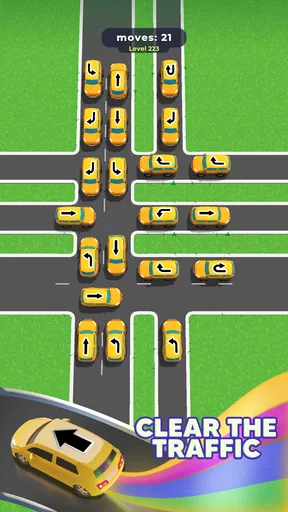
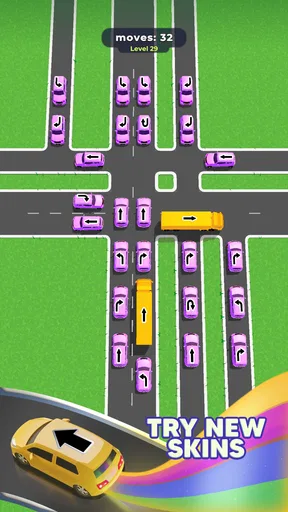
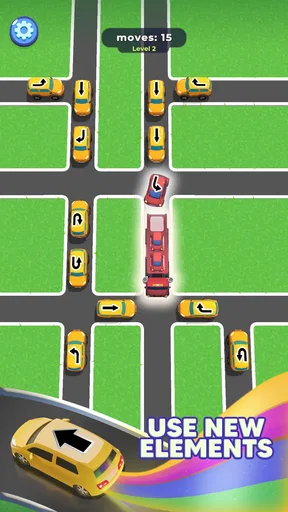
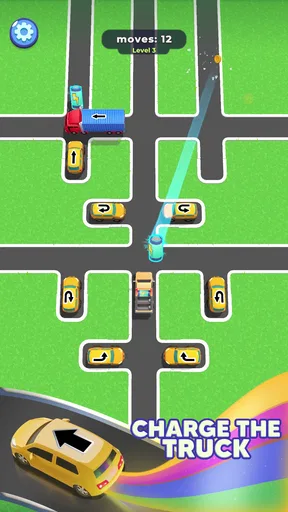


 Analysis by AppCompare
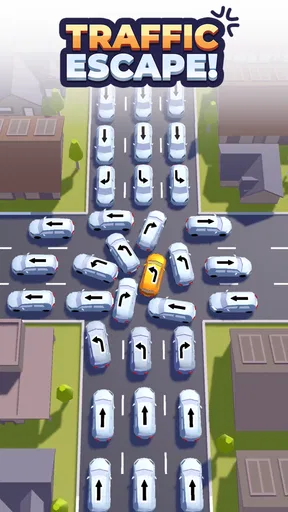
Traffic Escape! is the kind of puzzle game I open when I want a quick mental reset rather than a long story, a complicated control scheme, or a large commitment. Its central idea is easy to understand: I tap vehicles to help them leave a crowded road, while trying to avoid sending them into one another. That simplicity is the reason it works so well in short sessions, but it also means the quality of each puzzle matters more than the number of features around it.
Developed by FOMO GAMES, this free puzzle game has built a substantial audience, with an average rating of 4.6 from around 1.1 million ratings and more than 10 million installs. It is rated for Everyone, so the presentation is approachable for a broad audience. I would describe it as a casual traffic-management puzzle with an arcade-like rhythm: look, predict, tap, and learn from the result.
The store summary presents the basic idea as tapping to escape traffic, but that does not fully explain the appeal. The satisfying part is not simply clearing vehicles. It is recognizing the order in which they can move, noticing which car is blocking another, and resisting the urge to tap too quickly. The game turns a familiar traffic jam into a small logic problem that can be solved in moments.
How the first goals make the game easy to enter
The early experience is built around understanding the board at a glance. I do not need to learn a long list of controls before playing. The immediate goal is visible, and the interaction is direct: choose a vehicle, tap it, and watch whether the route is safe. That low entry barrier is especially useful on a phone, where a game needs to communicate its rules quickly.
What makes the opening goals effective is that they teach caution without turning the first steps into a lecture. A crowded road may look chaotic, but the solution usually begins with one or two obvious movements. Once those vehicles leave, the rest of the layout becomes easier to read. I found myself naturally learning to scan the whole scene before making the first move, even when the first tap seemed obvious.
That habit is important because the game rewards planning more than speed. A fast tap is not automatically a good tap. If I focus only on the nearest vehicle, I can create a collision or block a route that would have been useful later. The early puzzles therefore establish a useful rule: the best move is often the one that improves the board, not the one that removes a vehicle immediately.
The goal structure also suits everyday interruptions. I can play while waiting for a drink, during a short break, or when I have only enough attention for a few puzzles. There is no need to remember a complicated narrative or rebuild a large strategy from a previous session. The board itself tells me what needs attention.
Worth Reading Before You Choose

Flipboard Shows What News Apps Must Do Beyond the Feed

Switching to Android Auto Means Rethinking Your Driving Routine

Google Calendar Makes a Crowded Week Easier to Manage

Ludo King Makes the Most of the Minutes Between Plans

Baby Panda World Brings Quick Play to Modern Phones, but Its Game Library Feels Busy

ESPN’s Live Game View Makes Following Close Games Easier
Why the visual objective matters
Many puzzle games hide their objective behind menus, counters, or layered instructions. Here, the traffic arrangement is the instruction. I can usually tell what needs to happen by looking at the vehicles and open paths. That makes the game friendly to people who do not normally seek out puzzle titles, including someone who wants a simple game for occasional use rather than a hobby that demands study.
There is also a nice difference between knowing the goal and knowing the solution. I understand that vehicles must escape, but I still have to work out the sequence. This separation gives the puzzles their tension. The game does not need elaborate rules to create uncertainty; the positioning of the traffic provides it.
Progress signals without overcomplicating the session
Progress in a game like this is felt through cleaner solutions and increasingly confident decisions. At first, I am mostly asking, “Which vehicle can move?” Later, I am asking, “Which vehicle should move first, and what will that reveal?” That change in thinking is a meaningful progression signal even when the basic tap interaction remains the same.
The current version is 5.5.6, and the game remains focused on its core puzzle identity rather than asking me to manage a broad collection of unrelated systems. I appreciate that focus. In many casual games, progress can become buried under upgrades, currencies, or decorative tasks. Traffic Escape! is strongest when the puzzle itself remains the reason to continue.
For a new player, I recommend treating each board as a small planning exercise instead of trying to rush through it. Before tapping, identify the vehicles with the clearest exit and the ones whose movement could open space for others. This simple two-pass approach reduces careless mistakes and makes the game feel more thoughtful without slowing it down too much.
What makes the unlock-and-challenge rhythm work
The appeal of continued play comes from seeing whether the next arrangement will demand a different kind of thinking. A good progression rhythm should make early success feel attainable while gradually asking for more careful sequencing. Traffic Escape! benefits from that natural structure because every new layout can change the relationship between vehicles, exits, and available space.
I do not see the game as a traditional puzzle campaign with a dramatic storyline. Its progress is more immediate and practical: solve the current traffic problem, then face another. That is a strength for short sessions, although players who need a strong narrative reason to continue may find the experience comparatively light.
The most useful personal milestone is learning to avoid “panic tapping.” When a board appears crowded, tapping repeatedly can feel productive, but it usually removes the information I need to make a good decision. I get better results by pausing for a moment, tracing possible routes, and selecting the move that leaves the most options open.
Difficulty, pacing, and the pressure to keep playing
The difficulty curve works best when it lets me feel clever before it asks me to be precise. Straightforward layouts give the controls room to become familiar. More demanding boards then use the same basic interaction to test ordering, patience, and visual attention. That is a fair way to increase challenge because the game does not need to replace its rules in order to make me think harder.
There is a clear trade-off in this design. Players who enjoy compact logic puzzles may appreciate the clean escalation, while players looking for a large variety of mechanics could eventually want more surprise. The game’s identity is tied to traffic movement, so the challenge has to come from arrangement and timing rather than from a constantly expanding rulebook.
For me, that makes the pacing easy to control. I can play several boards when I am in the mood, or stop after one difficult attempt without feeling that I have abandoned a larger obligation. The individual-puzzle format is more forgiving than games that punish a missed daily streak or require a long uninterrupted session.
How to handle difficult traffic layouts
My most reliable method is to separate vehicles into three groups: those that appear immediately free, those that are blocking another route, and those whose movement depends on several earlier decisions. I start with the first group only when doing so does not consume a useful lane or create a new obstruction. Then I look for the blocker that will simplify the largest part of the board.
A second helpful technique is to think one move beyond the obvious result. If a vehicle can leave, I ask what space its departure creates and whether that space matters. Sometimes the value of a move is not the vehicle that escapes but the visibility it gives me into the remaining arrangement. This is a small distinction, but it prevents me from treating every legal tap as equally useful.
When I make a mistake, I try to identify the mistaken assumption rather than simply replaying the same sequence faster. Did I overlook a vehicle’s path? Did I move something before the board was ready? Did I assume that clearing one area would automatically solve another? Asking that question turns failure into a practical lesson and keeps the challenge from feeling random.
Retention pressure and the free-to-play balance
The game is free to download and play, with in-app purchases ranging from $0.99 to $119.99 per item. That range is worth keeping in mind before starting, especially for anyone sharing a device with children. The Everyone rating makes the game broadly accessible, but an age-friendly presentation does not remove the need for sensible purchase controls.
In my view, the strongest reason to return should be the next puzzle, not pressure created by spending. The compact format naturally encourages “one more board,” because a puzzle can feel close to solved even after a failed attempt. That can be enjoyable when I am choosing to continue, but it can also make a short break expand into a longer session than planned.
I recommend deciding in advance whether I am playing for a fixed number of puzzles or for a fixed amount of time. This is particularly useful during work breaks, because the game’s quick restart loop makes it easy to begin another attempt immediately. The same convenience that makes it accessible can also make it surprisingly sticky.
Another consideration is patience. If I want a relaxing game with no possibility of frustration, this may not always be the best choice. A board that looks nearly solved can still require a careful sequence, and repeating an attempt may feel irritating when I am tired. In those moments, a slower, more forgiving puzzle game may suit me better.
Who will enjoy it, and who should choose something else
Traffic Escape! is a good fit for players who like visual logic, short rounds, and challenges that can be understood without reading a manual. It also works well for families looking for an approachable puzzle activity, provided purchase settings are handled responsibly. People who enjoy optimizing order and spotting patterns will likely get more from it than people who want reflex-heavy action.
I would be more cautious recommending it to someone who needs a deep story, character development, or a wide range of puzzle types. It is also not my first choice for a player who prefers completely open-ended experimentation, because the central task remains focused on clearing traffic. For that audience, a traditional brain-training collection or a narrative puzzle adventure may offer more variety.
Compared with match-three games, this feels less dependent on luck and more dependent on reading the current layout. Compared with word puzzles, it is more visual and immediate, with less emphasis on vocabulary. Compared with physics-based traffic games, it is closer to deliberate sequencing than chaotic experimentation. Those differences matter: I reach for this title when I want a puzzle I can inspect before acting.
A realistic everyday session
Imagine waiting for a bus with five minutes to spare. I can start a board, study the traffic, and make a few deliberate taps without needing sound or a long setup. If the puzzle becomes awkward when the bus arrives, stopping is easy because the game’s appeal is contained in the current layout rather than in a conversation or timed story sequence.
At home, I might use it differently. After finishing a demanding task, I can play several boards and focus on improving my planning. The game gives my attention something concrete to organize, which is more satisfying than endlessly scrolling, but it does not demand the emotional investment of a larger adventure game.
That flexibility is one of its practical strengths. The same design supports a two-minute distraction and a longer puzzle session. The limitation is that the experience may feel repetitive if I play for a very long time without a break, because the basic action stays familiar even as the layouts become more demanding.
My progression verdict
Traffic Escape! succeeds because its goals are immediate, its progress is easy to feel, and its challenge grows from the arrangement of the traffic rather than from complicated controls. I enjoy the moment when a board that first looks tangled becomes readable after one carefully chosen move. That small transformation is the game’s central pleasure.
FOMO GAMES has kept the concept accessible enough for casual players while giving observant players room to improve. The best way to enjoy it is to slow down before the first tap, identify which movement opens the board, and treat failed attempts as information. That approach makes the puzzles more satisfying and reduces the frustration caused by impulsive choices.
The game is free, supports devices running Android 8.0 or later, and carries an Everyone content rating. Its popularity is reflected in more than 10 million installs, but popularity alone would not be enough for my recommendation. I recommend it because the core interaction is clear, the sessions are flexible, and the puzzle-solving remains understandable even when the traffic becomes difficult.
My final view is positive, with one important qualification: this is best as a focused casual puzzle, not as an all-purpose entertainment platform. If you enjoy visual planning and want a game that can fill a spare moment without a steep learning curve, I think it is worth trying. If you need story, broad mechanical variety, or a completely pressure-free experience, another puzzle style may be a better match. For everyone else, the real strength is the steady shift from tapping what looks available to planning what the whole board needs.
Pros
- Simple swipe controls make the game easy to learn.
- Short levels are convenient for quick gaming sessions.
- Increasing traffic creates a satisfying challenge curve.
- Bright visuals make cars and obstacles easy to distinguish.
- Works well for casual play without requiring complex strategy.
Cons
- Gameplay can become repetitive after extended sessions.
- Later levels may feel difficult without careful timing.
- Frequent ads may interrupt the flow between attempts.
- Limited variety in objectives reduces long-term freshness.
- Offline availability and device support may vary by version.
FAQs for Traffic Escape!
What is Traffic Escape!?
Traffic Escape! is a casual puzzle game focused on clearing vehicles from busy roads. You tap or select cars in the correct order so they can leave without crashing into other vehicles or obstacles. The gameplay is easy to understand at first, but later levels introduce tighter spaces, blocked routes, and more demanding decisions that require patience and careful planning.
How do you play Traffic Escape!?
The main objective is to guide every vehicle out of the level safely. Before making a move, you need to study the direction each car is facing and check whether another vehicle or object is blocking its path. Selecting vehicles in the right sequence gradually opens the road. If you choose incorrectly, traffic can collide or become stuck, forcing you to restart the puzzle.
Is Traffic Escape! free to download and play?
Traffic Escape! can generally be downloaded and played without an upfront purchase, making it accessible to casual players. However, free mobile games commonly include advertising, optional rewards, or in-app purchases. The exact availability of ads, extra items, and paid features may vary by device, region, and version, so it is worth checking the store listing before downloading.
Does Traffic Escape! require an internet connection?
Many of the basic traffic puzzles can often be played without a continuous internet connection, which is convenient for short sessions while traveling or when mobile data is unavailable. Nevertheless, an internet connection may be needed for advertisements, cloud features, updates, purchases, or certain online content. Offline behavior can change after updates, so test the game after installation.
Is Traffic Escape! suitable for children and casual players?
Traffic Escape! is designed around simple controls and straightforward visual puzzles, so it is approachable for casual players and older children. The challenge comes from planning rather than complicated controls or fast reflexes. Parents should still review the game’s age rating, advertising, and in-app purchase settings, particularly if children use the device, because store policies and content can change.


